Does everyone remember when AI couldn’t count the number of ‘Rs’ in ‘raspberry’? It’s easy to see how this happens. People ask questions online and everyone knows they mean the double letter at the end, so they answer ‘2’ (as opposed to 1) since there is an unspoken rule, that everyone is following, to ignore the first letter.
But people have talked about this a lot online since then, and training models have picked up on these conversations too, so now when you try and convince ChatGPT the answer is 2, it asks you for some weird and wonderful additional information about what we mean by ‘R’ or ‘raspberry’ to explain our answer – or it even suggests that you’re trying to convince it to question reality!
We might think: ‘Great! Gen AI can finally count.’ – which is one way of looking at it. But to my mind – there is a more fundamental issue at play here.
Who should we trust?
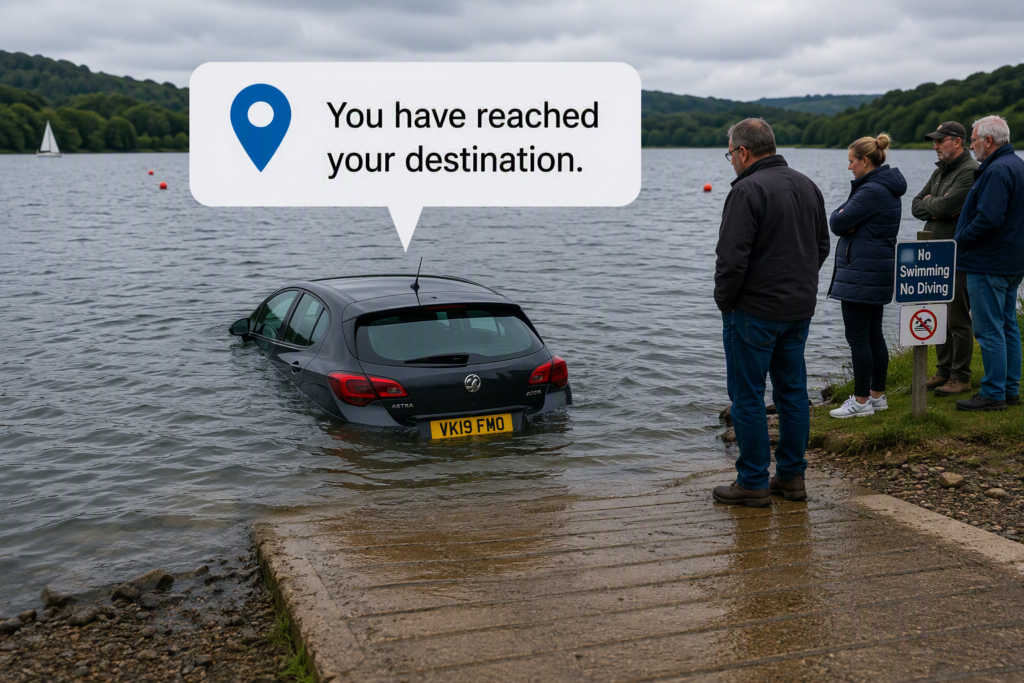
There’s a route I sometimes drive in Suffolk where, instead of there being a perfectly sensible bridge, a river is allowed to flow over the road to the height of a few inches. The first time our SAT-NAV sent me along this route I was understandably concerned. Needless to say, my kids loved it! But ultimately, I trusted that the map I was using wasn’t crazy (and I made the judgement call that the water didn’t look too deep) and I went for it.
One of the problems we face with AI is that it can be difficult to know how to make those assessments for the answers it provides – and increasingly we’re being told that it’s our job (as the subject-matter experts) to make these calls. Generative AI is now better than it used to be in telling us how it arrived at a particular answer, but as these models become increasingly complex, there will always be an element of mystery in the ‘black box’ between prompt and output.
You’re still the expert
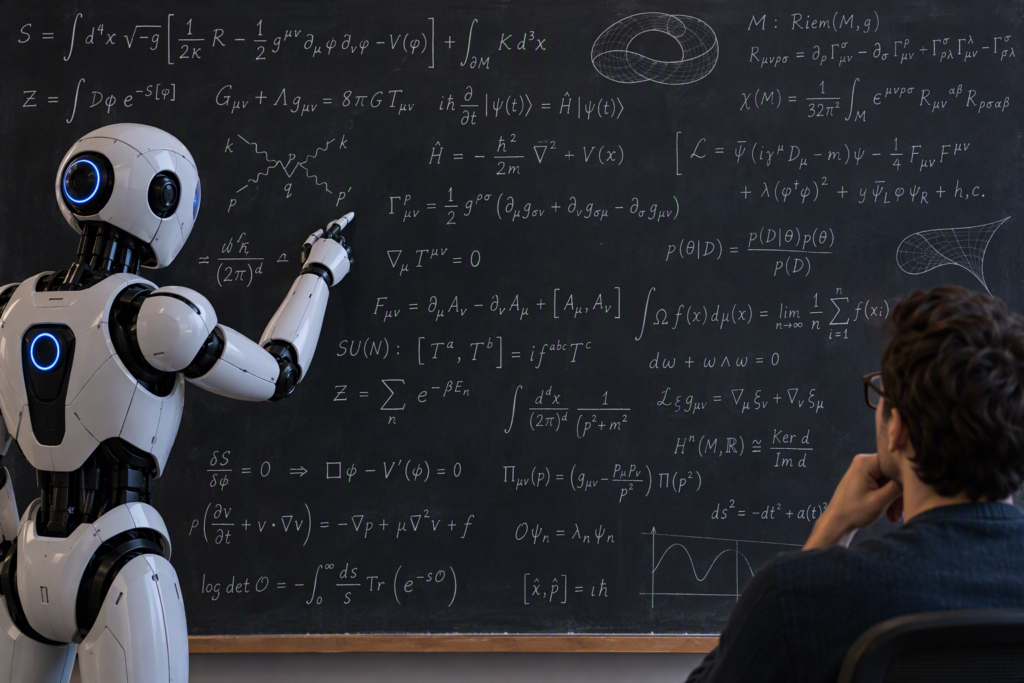
Over the last few years, I have been learning a few different programming languages for analytics (R, SQL and Python) – some with more success than others. Earlier this year I built Hermes, a Copilot agent which is basically normal Copilot, with a few tweaks to its instructions to teach me to code better and format it’s answers in a useful way. I can describe a problem, and Hermes will write the initial code, or optimise what I’ve already written.
But if Hermes is better at coding than me (which it is), then how do I check the outputs? One benefit I have with coding is that I know what result I want – I just don’t always know how to get there. Also, it’s not particularly deceptive – it either works or it doesn’t. But I rely on the bits and pieces of training I’ve done over the years to understand what the code is doing. So now I’ve got Hermes, do I still need to know how to code? Absolutely! The agent just saves me time and teaches me new things when my code is poorly written.
Human in the loop

People talk a lot about ensuring that you have a human-in-the-loop when using AI, but what’s often not talked about is what this should look like. It will often depend on the task you’re trying to perform, but the whole point of AI was that it saves you time – you get the system to do the boring repetitive work, rather than you. This feels like an unsolved problem for AI workflows:
- Step 1: Reading emails is boring and repetitive but have no fear! Copilot can now read and summarise them for us!
- Step 2: But hidden amongst all the organisational circulars are important things which might get missed. Let’s add a human in the loop to check that nothing has been missed.
- Outcome: Copilot has summarised my emails. I read the summaries, and then I read the emails to check the summaries are right. The end result? I’ve just added another task to my list (read the Copilot summary) and I’m still reading my emails!
Sure, there are instances when the summary is helpful (how many of us read the full 150 page reports we’re sent that have only a marginal relevance for our role?) and getting an AI summary is better than just ignoring it. But I don’t think we’re yet in a situation where I can stop reading my emails completely.
Artificial Stupidity

When we do a calculation in a calculator, we don’t feel the need to get out a pen and paper and check the answer. Similarly, when putting a destination in our Sat-Nav, we don’t get a map out and check it’s not sent us on a crazy route (until we are confronted with the river, that is!)
The point is that we trust these narrow-use tools, because of repeated successes. But we’ve all seen too many AI photos of people with extra fingers to really trust its outputs – though maybe future generations who aren’t exposed to these mistakes will feel differently! For most innovative technologies, if it gets released to the public while perpetuating falsehoods or dramatically worsening mental health symptoms of vulnerable users, it would immediately be recalled for safety reasons. Yet for AI, as a society, we accept these ‘hallucinations’ as quirks of the system and focus on the benefits.
What do we bring to the table?

We’re all participating in a grand experiment, where AI is fed increasing amounts of data in the guise of helping us solve our problems. As these systems are trained on larger datasets and more human interactions, they become more capable and, in theory, make fewer (or at least different) mistakes. But there is an upper limit to how many new things can be put into a prompt, so eventually AI systems will already have some experience with everything we could think to throw at it.
What we bring is adaptability and creativity. There’s something important about the ‘Artificial’ in ‘Artificial Intelligence’. These systems are not experiencing the world in the way that we do. What they’re getting better at is producing responses which resemble intelligent thought. What humans bring is we continue to engage with the world and relate to one another as we tackle the greatest problems of our time. AI is a tool – and a powerful one – but one that will always be most effective when augmented with human capabilities, rather than seeking to replace them. So what do we bring to the table when AI has already filled it with food? We bring life to the party.
Steve Parsons
Advanced Analyst & Researcher
Suffolk Office of Data & Analytics